


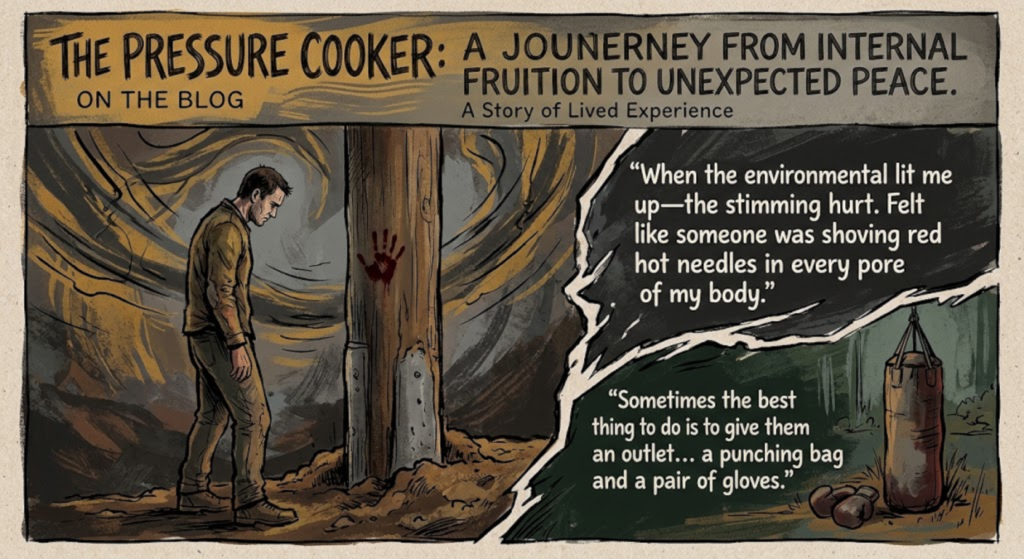
I can’t speak for anyone else or pretend to know how sensory overload feels to another person. But for me, when my system ran hot, it felt like someone was shoving red-hot needles into every single pore of my body, from my scalp down to my feet.
In an environment that demanded quiet compliance, the natural ways my body tried to discharge that immense pressure—moving or stimming—were met with shame, ridicule, or the threat of a smack upside the head. So I learned to lock it down. I had to grin and bear it. I forced all that friction inside.
But physical energy doesn’t just disappear because you suppress it. It builds up behind the dam.
When that pressure cooker finally breached, it looked like a sudden, explosive temper. What people didn’t see was what was happening on the inside: a desperate, total loss of control where I saw red and searched frantically for an escape. Because I never wanted to be violent toward anyone else, that internal conflict created a terrifying choice. If the environment was lighting me up like a Christmas tree, and I refused to harm the human beings around me, where did all that force go?
It went into the post.
For me, it was 6×6 timber posts cemented into the ground. When the temper blew, those posts became the only place to dump the voltage. I punched until there was literally nothing left inside of me to throw—leaving behind broken knuckles, permanent scars, and a cold realization: I was inflicting physical pain on myself just to survive what the environment was doing to me.
It was a brutal way to clear the circuit. Over time, discharging that energy until the tank was entirely empty was how I beat the temper out of myself. But nobody should have to break their own body to keep the people around them safe.
When a child is showing aggression, it doesn’t happen in a vacuum. Aggression is built-up pressure that has run out of space. If you can’t blow out the lines, the system is eventually going to blow.
Sometimes the most protective thing you can do for a kid in that state isn’t to demand quiet surrender or punish the storm. It’s to give them a legitimate, physical outlet to bleed off the charge—hand them a pair of gloves, point them at a heavy bag, and let them start swinging. Give them the space and the onus to work through the raw physical reality of their own emotions, on their own terms, until they figure it out.
Because beneath that storm is often just a person trying their hardest to find peace—and there is nothing like the wrath of a man who never wanted to be violent.
Looking for honest dialogue?
If you're ready to look past the industry narratives and talk real behavioral mechanics—whether you're neurodivergent yourself or a working practitioner—my door is open.
- Email: info@autismradical.com
- Join the mirror: Autism Radical: Reclaiming Behavioral Science on Facebook
Come as you are. No judgment, just pure mechanics and open discussion.